If jaw misalignment, bite problems, or facial imbalance are affecting your quality of life, we can help you explore your options. Dr. Wade will evaluate your concerns, discuss whether surgical orthodontics may be appropriate, and develop a personalized treatment plan around your goals.
Surgical Orthodontics in Columbus, OH
When jaw alignment concerns go beyond what braces or clear aligners can correct alone, surgical orthodontics may be the most effective path to a healthy bite and balanced facial appearance. At Wade Orthodontics, Dr. Andrew B. Wade, DDS, MS, works closely with skilled oral and maxillofacial surgeons to provide comprehensive care for patients throughout Columbus, Upper Arlington, Dublin, Hilliard, Grandview, Galloway, and surrounding Central Ohio communities with significant jaw discrepancies and skeletal imbalances. Our approach is built on caring for a person, not simply moving teeth. For patients with complex jaw concerns, that means coordinating every step of care with precision and compassion.
Through careful treatment planning and coordinated care, surgical orthodontics can improve oral health, bite function, facial symmetry, and long-term comfort. Whether you are experiencing difficulty chewing, jaw pain, severe bite issues, or concerns about facial balance, our team can help determine the best options for your unique needs during a complimentary consultation.
What Is Surgical Orthodontics?
Surgical orthodontics, also known as orthognathic surgery, combines orthodontic care with corrective jaw surgery to address significant misalignment and skeletal discrepancies. While traditional orthodontic treatment can move teeth into better positions, it cannot change the size, shape, or position of the jaw bones once growth is complete. Surgical orthodontics focuses on correcting problems involving the upper and lower jaws, facial structure, and bite function. Common conditions treated include:
Severe overbites and underbites
Open bites and jaw asymmetry
Facial asymmetry and recessed jaw concerns
Significant jaw discrepancies
Difficulty chewing or speaking
Chronic jaw pain
Functional concerns involving the temporomandibular joints
For many patients, this specialized treatment provides meaningful and lasting improvements in both function and appearance.
Dr. Wade carefully evaluates each patient’s anatomy, oral health, and treatment goals before recommending a surgical approach.
Who Needs Surgical Orthodontics?
Not every orthodontic patient requires surgery. Many bite problems can be successfully treated with traditional braces, LightForce brackets, or clear aligners. Surgical orthodontics is typically recommended for adults whose jaw growth has been completed and who have structural concerns that cannot be corrected through orthodontic treatment alone. You may be a candidate if you have one or more of the following:
When the upper and lower jaws do not fit together properly, patients may experience bite issues that affect chewing, speaking, and overall oral health.
Facial symmetry plays an important role in both function and aesthetics. Corrective jaw surgery can improve facial balance when skeletal discrepancies affect facial appearance.
Difficulty chewing, speech concerns, airway challenges, or jaw pain may indicate underlying positioning issues that require surgical treatment to resolve effectively.
Some severe cases involve a combination of structures including the jaw bones, teeth, and facial structure. These cases often benefit from a coordinated approach involving both an orthodontist and an oral and maxillofacial surgeon.
Crowding is one of the most common orthodontic concerns. It occurs when there is insufficient space in the dental arches, preventing teeth from erupting into proper positions. Crowded teeth can create challenges with oral hygiene, flossing and brushing, and prevention of tooth decay and gum disease. In some cases, crowding can contribute to an impacted tooth that cannot erupt properly. Treatment options may include traditional metal braces, LightForce brackets, or clear aligners designed to gradually move teeth into healthier alignment.
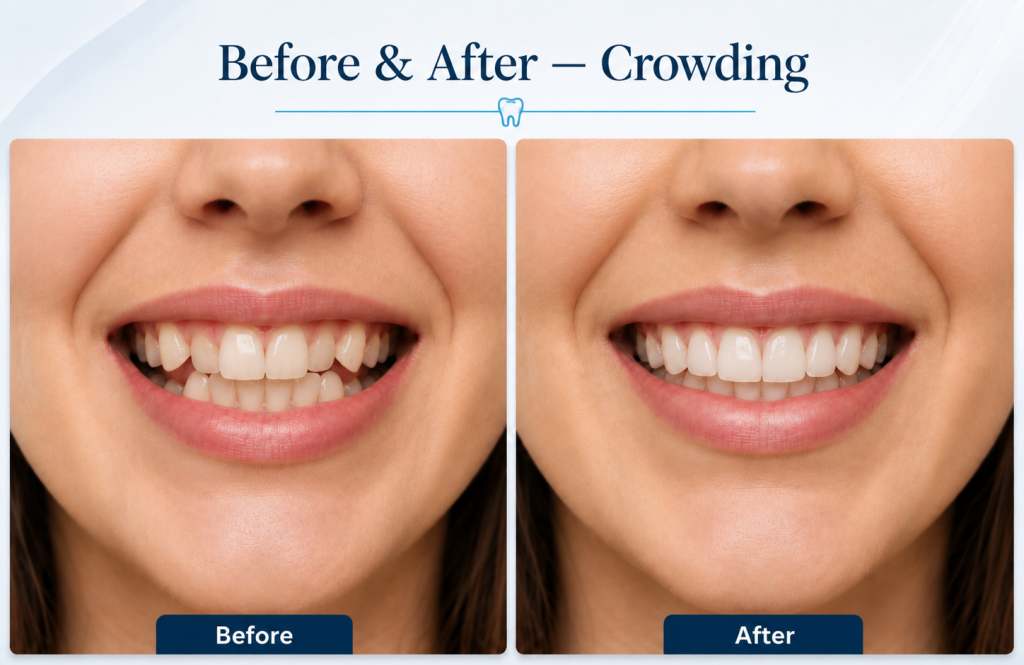
Spacing issues occur when there are gaps between teeth. Excessive spacing may develop because of tooth size differences, a missing tooth, tooth loss, or natural jaw spacing. While some gaps are primarily cosmetic concerns, spacing can also affect bite function, oral hygiene, and long-term tooth stability. Depending on the cause, treatment may involve orthodontic care, dental bonding, or a combination of approaches.
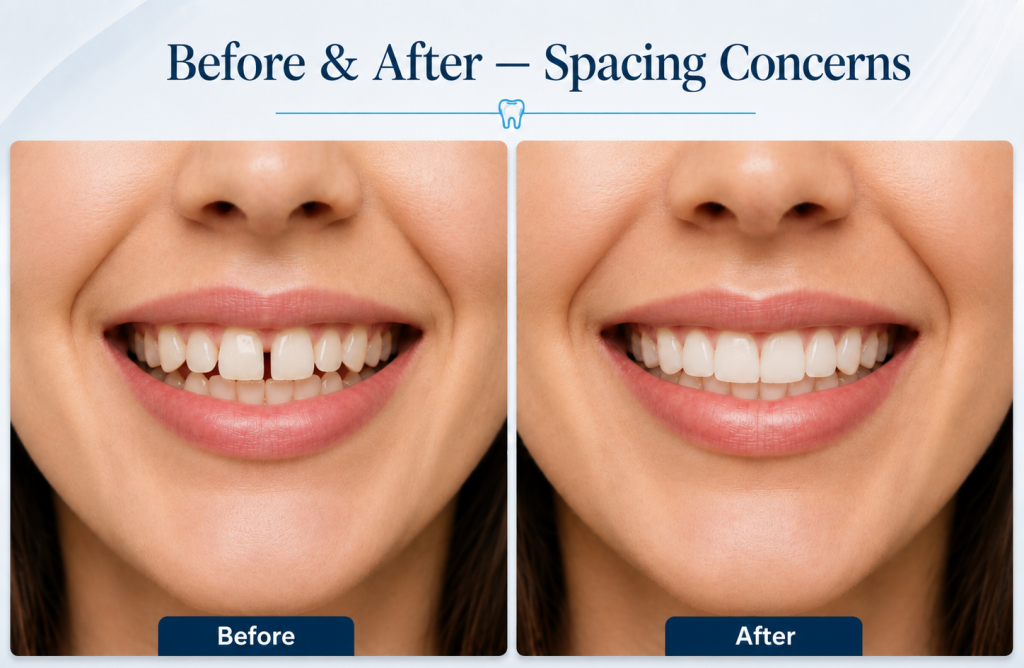
In addition to the most common orthodontic issues, patients may also experience midline misalignment where the center of the upper teeth does not align with the center of the lower teeth, impacted teeth that become trapped beneath the gums and cannot erupt properly, jaw alignment concerns that affect facial structure and bite function, and TMJ-related symptoms. While orthodontic treatment is not always the solution for TMJ disorders, correcting bite issues may help improve overall function in certain cases.
Benefits of Surgical Orthodontic Care
Surgical orthodontics offers benefits that extend well beyond aesthetics. Correcting jaw discrepancies can improve both everyday function and long-term oral health. Potential benefits include:
Improved bite function and chewing efficiency
Enhanced facial symmetry and facial balance
Reduced chronic jaw pain and improved jaw positioning
Better long-term oral health outcomes
Greater comfort during daily activities
Improved speech in some cases
A healthier, more confident smile
Because the jaws and teeth work together as a system, correcting skeletal imbalances often creates results that are both functional and aesthetically meaningful.
The Surgical Orthodontic Process
The first step is a comprehensive evaluation with Dr. Wade. During this visit, we examine your bite, discuss your concerns, and review potential treatment options.
Successful surgery depends on careful planning. Advanced digital imaging technology allows Dr. Wade and the team to evaluate jaw positioning, facial structure, and bite function with precision. A customized treatment plan is created based on the complexity of the case and your goals.
Most patients begin with traditional braces or another fixed appliance before surgery. During this phase, orthodontic treatment focuses on tooth movement and preparing the teeth for their ideal post-surgical positions. This stage may last several months depending on individual treatment needs.
The surgical procedure is performed by an experienced oral and maxillofacial surgeon in a surgical center or hospital setting under general anesthesia. During orthognathic surgery, the surgeon repositions the upper and lower jaws, or both, to create proper alignment and improved bite function.
Following recovery, orthodontic treatment continues to fine-tune tooth positions and achieve optimal results. Rubber bands may be used as part of continued treatment to guide the bite into its final position.
Once active treatment is complete, retainers help maintain your results and protect your orthodontic investment long term.
Every surgical orthodontic case is unique, but most patients follow a similar sequence of care.
Recovery After Surgery
Recovery varies from patient to patient, but most individuals experience some swelling, soreness, and temporary dietary or activity restrictions. Dr. Wade and your surgical team will provide detailed aftercare instructions and guidance to help you heal comfortably and return to normal activities.
Surgical Orthodontics & Facial Aesthetics
Surgical orthodontics can improve bite function while also addressing jaw and facial asymmetry. For patients with certain jaw alignment concerns, orthognathic surgery can complement orthodontic treatment to create a healthier bite, improved oral function, and more balanced facial proportions.
Personalized Surgical Orthodontic Care
Every surgical orthodontic case is unique. Dr. Wade works closely with experienced oral and maxillofacial surgeons throughout Columbus and Central Ohio to coordinate individualized care from your initial evaluation through treatment completion, with your goals and overall well-being guiding your treatment plan.
Schedule Your Complimentary Consultation
Frequently Asked Questions About Surgical Orthodontics
Is surgical orthodontics only for adults?
In most cases, yes. Orthognathic surgery is typically recommended for adults because jaw growth must be complete before surgical repositioning can be performed effectively. Younger patients with jaw discrepancies are generally monitored until growth is finished, at which point surgical options can be properly evaluated. Dr. Wade will assess your jaw development during your consultation and discuss the most appropriate timing for treatment.
Will I need braces if I have jaw surgery?
Yes. Most patients require orthodontic treatment both before and after surgery to ensure proper tooth movement and bite alignment throughout the entire process. Pre-surgical orthodontics prepares the teeth for their ideal post-surgical positions, and post-surgical treatment fine-tunes alignment once healing is complete. Dr. Wade will coordinate every phase of care in close collaboration with your oral and maxillofacial surgeon.
How long does surgical orthodontic treatment take?
Treatment length varies based on the complexity of the case and individual healing. Many patients spend several months in pre-surgical orthodontic preparation, followed by surgery and a recovery period, and then additional orthodontic treatment to finalize results. Dr. Wade will provide a personalized timeline estimate during your complimentary consultation so you have a clear understanding of what to expect from start to finish.
Is jaw surgery painful?
Patients are under general anesthesia during the procedure and do not experience pain during surgery. Some discomfort is expected during recovery, but it is typically manageable with prescribed medications and post-operative care instructions from your surgical team. Most patients find that discomfort decreases significantly within the first one to two weeks as healing progresses.
How much does surgical orthodontics cost in Columbus, Ohio?
The cost depends on your specific treatment plan, the complexity of the case, and the type of surgical procedure required. Initial consultations at Wade Orthodontics are complimentary, so there is no cost to find out whether surgical orthodontics may be right for you. During your visit, Dr. Wade will provide a personalized estimate and our team will discuss financing options and potential insurance benefits so you can make a fully informed decision.
What is the difference between surgical orthodontics and regular orthodontic treatment?
Regular orthodontic treatment uses braces, clear aligners, or other appliances to move teeth into better alignment. Surgical orthodontics combines orthodontic care with corrective jaw surgery to address skeletal discrepancies that cannot be resolved by moving teeth alone. It is typically recommended when jaw size, shape, or positioning significantly affects bite function, facial balance, or oral health in ways that orthodontic treatment by itself cannot correct.
Call or request an appointment at wadeorthodontics.com/contact-us today to schedule your complimentary consultation and learn how surgical orthodontic care can help you achieve improved function, facial balance, and a confident smile.
Frequently Asked Questions About Surgical Orthodontics
Is surgical orthodontics only for adults?
In most cases, yes. Orthognathic surgery is typically recommended for adults because jaw growth must be complete before surgical repositioning can be performed effectively. Younger patients with jaw discrepancies are generally monitored until growth is finished, at which point surgical options can be properly evaluated. Dr. Wade will assess your jaw development during your consultation and discuss the most appropriate timing for treatment.
Will I need braces if I have jaw surgery?
Yes. Most patients require orthodontic treatment both before and after surgery to ensure proper tooth movement and bite alignment throughout the entire process. Pre-surgical orthodontics prepares the teeth for their ideal post-surgical positions, and post-surgical treatment fine-tunes alignment once healing is complete. Dr. Wade will coordinate every phase of care in close collaboration with your oral and maxillofacial surgeon.
How long does surgical orthodontic treatment take?
Treatment length varies based on the complexity of the case and individual healing. Many patients spend several months in pre-surgical orthodontic preparation, followed by surgery and a recovery period, and then additional orthodontic treatment to finalize results. Dr. Wade will provide a personalized timeline estimate during your complimentary consultation so you have a clear understanding of what to expect from start to finish.
Is jaw surgery painful?
Patients are under general anesthesia during the procedure and do not experience pain during surgery. Some discomfort is expected during recovery, but it is typically manageable with prescribed medications and post-operative care instructions from your surgical team. Most patients find that discomfort decreases significantly within the first one to two weeks as healing progresses.
How much does surgical orthodontics cost in Columbus, Ohio?
The cost depends on your specific treatment plan, the complexity of the case, and the type of surgical procedure required. Initial consultations at Wade Orthodontics are complimentary, so there is no cost to find out whether surgical orthodontics may be right for you. During your visit, Dr. Wade will provide a personalized estimate and our team will discuss financing options and potential insurance benefits so you can make a fully informed decision.
What is the difference between surgical orthodontics and regular orthodontic treatment?
Regular orthodontic treatment uses braces, clear aligners, or other appliances to move teeth into better alignment. Surgical orthodontics combines orthodontic care with corrective jaw surgery to address skeletal discrepancies that cannot be resolved by moving teeth alone. It is typically recommended when jaw size, shape, or positioning significantly affects bite function, facial balance, or oral health in ways that orthodontic treatment by itself cannot correct.
LET’S GET STARTED
Schedule Your Complimentary Consultation
3404 Riverside Drive
Columbus, OH 43221
Monday - Thursday: 7:30am - 4:00pm
Friday: Office Closed | Phones Available 8:00am – 1:00pm